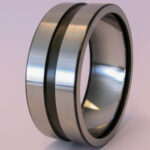
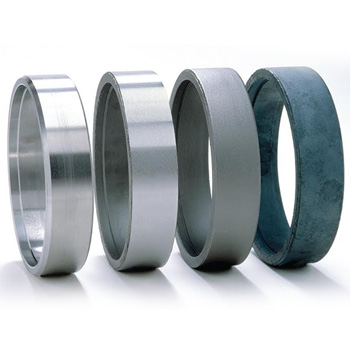
Bearing rings are one of the most important components in a bearing assembly. They provide the necessary raceway surfaces that allow rolling elements to move smoothly while supporting radial and axial loads. Because bearings are used in demanding applications, the quality and precision of bearing rings directly influence equipment performance, reliability and service life.
Modern bearing ring manufacturing combines advanced forging, turning, heat treatment and precision machining technologies to produce components that can meet demanding industrial requirements.
A bearing generally consists of several key components, including inner rings, outer rings, rolling elements and a cage. The inner and outer rings provide the raceways on which the rolling elements operate.
Bearing rings must maintain high dimensional accuracy, excellent surface quality and appropriate material properties. Even small variations in geometry or hardness can affect bearing performance.
This is why choosing an experienced bearing ring manufacturer is important for automotive and industrial applications.
The manufacturing process can vary depending on the bearing type, material and application. However, a typical manufacturing process may include the following stages:
The manufacturing process begins with selecting suitable bearing steel or other specified materials. Material quality plays an important role in determining the strength, fatigue resistance and durability of the finished component.
The material is selected according to the required application, load conditions and customer specifications.
Forging is widely used for producing bearing rings because it can provide a strong and reliable component structure.
During forging, the material is shaped under controlled temperature and pressure. Properly controlled forging can help achieve the required geometry while providing desirable mechanical properties.
For high-volume production, modern forging equipment can also improve productivity and consistency.
After forging, bearing rings undergo turning and machining operations to achieve the required dimensions and geometry.
Precision machining is essential because bearing rings must meet strict dimensional requirements. Automated and advanced machining systems can help manufacturers maintain consistency across large production volumes.
Heat treatment is an important stage in bearing ring manufacturing.
The process is designed to achieve the required hardness, strength and wear resistance. Proper heat treatment can improve the ability of the bearing ring to withstand repeated loading and demanding operating conditions.
Temperature control, process monitoring and quality inspection are therefore critical during this stage.
Precision grinding and finishing operations are performed to achieve the required surface quality and dimensional accuracy.
The raceway surface is particularly important because it directly interacts with the rolling elements. Proper finishing helps reduce friction and supports smooth bearing operation.
Before delivery, bearing rings are inspected according to applicable specifications and customer requirements.
Quality control may include dimensional inspection, hardness testing, surface inspection and other process-specific checks.
A strong quality management system helps ensure that components remain consistent from batch to batch.
Bearing rings can be manufactured for different bearing designs and applications.
Some commonly used types include:
The appropriate design depends on the bearing type, operating environment, load requirements and application.
Bearing components are used across a wide range of industries.
Bearings are essential in many automotive systems. High-quality bearing rings help support reliable operation under varying loads, speeds and temperatures.
Industrial equipment relies on bearings for smooth movement and efficient power transmission. Bearing rings are used in motors, gearboxes, pumps, machines and other industrial systems.
Heavy-duty applications require components capable of operating under demanding mechanical conditions. Properly manufactured bearing rings can contribute to improved reliability and equipment performance.
Bearing components are also used in various mechanical and engineering applications where controlled movement, reduced friction and reliable load support are required.
Precision is one of the most important factors in bearing component manufacturing.
Accurate dimensions and controlled surface characteristics can help ensure proper interaction between the bearing rings and rolling elements.
Poor dimensional control may result in:
For this reason, manufacturers need robust production processes and effective inspection systems.
When selecting a bearing ring supplier, businesses should consider several factors:
Look for a manufacturer with appropriate forging, machining, heat treatment and finishing capabilities.
A reliable supplier should have clearly defined quality-control procedures and inspection processes.
For high-volume requirements, production capacity and process consistency are important considerations.
Technical knowledge and internal engineering capabilities can help manufacturers develop solutions for specific customer requirements.
Industry experience can be valuable when dealing with complex specifications, demanding applications and large-scale production.
Bearing rings play a critical role in the performance and reliability of bearing assemblies. From material selection and forging to machining, heat treatment, finishing and inspection, every manufacturing stage can influence the final component.
For manufacturers and industrial buyers, selecting the right bearing ring supplier means evaluating manufacturing capability, quality systems, engineering expertise, production capacity and consistency.
As industries continue to demand more reliable and efficient mechanical systems, precision-manufactured bearing components will remain an important part of modern engineering.
Since 1972, PUSHP GROUP has built a strong legacy in the manufacture of bearing rings and precision-engineered components, combining engineering expertise, advanced technology, uncompromising quality, and continuous innovation to deliver lasting value to our customers.
Pushp Group © 2026. All Right Reserved